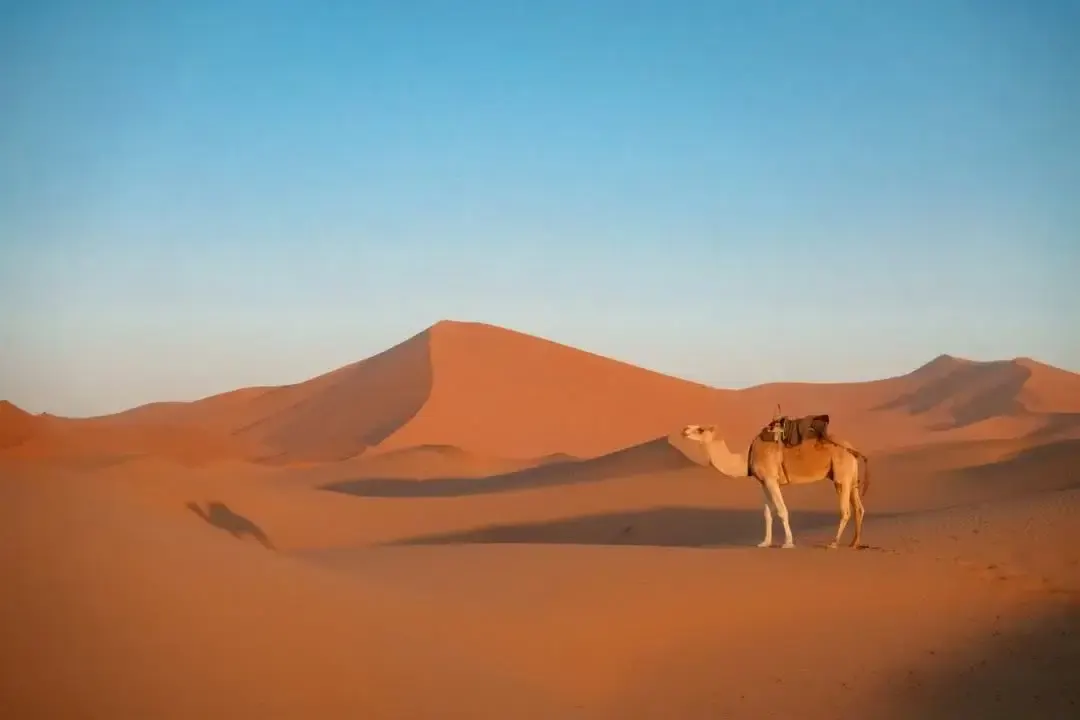

The Sahara is open all year, but it is not the same place in January as it is in July. The colour of the dunes, the length of the evening, how cold the camp gets after midnight and how comfortable a camel ride feels at noon all change with the calendar. Living and working around Erg Chebbi, we get asked about timing more than almost anything else, so here is our honest, season-by-season guide.
A quick note before we start: the temperatures below are approximate typical ranges for the Merzouga area. Weather varies from year to year, and a cool spell in May or a warm week in December is perfectly normal. Always check a current forecast a few days before you travel.
The short answer
- Most comfortable overall: mid-March to May, and late September to November.
- Clearest, crispest skies and fewest crowds outside holidays: December to February — but bring real warm clothes for the nights.
- Hottest and quietest: June to August — doable with early starts and long afternoon breaks, but not for everyone.
Spring (March to May)
Spring is a favourite for good reason. Days are typically warm rather than hot — often somewhere in the mid-20s °C, climbing towards the 30s by late May — and nights at camp are mild enough to sit outside around the fire without layering up too much.
It is also a lovely time to combine the desert with the rest of the south. The Dades Valley and the oases around Todra Gorge are green, and almond and fruit trees may be in blossom early in the season.
Watch out for wind
Spring is also the season when strong winds and sandstorms are most likely in the region. Most are short-lived — a hazy afternoon, sand in your camera bag, a sunset hidden behind a dusty sky — but occasionally a stronger wind can delay a camel trek or a dune activity. When that happens, we adjust timings for safety; the dunes will still be there the next morning. A light scarf (or a proper cheche head wrap) and sunglasses make a big difference.
Summer (June to August)
Summer in Merzouga is genuinely hot. Daytime temperatures commonly pass 40 °C, and the sand itself gets much hotter than the air. That does not make a visit impossible — many travellers come in summer because it fits school holidays — but it changes the rhythm of the day:
- Camel treks and dune walks happen at sunrise and in the late afternoon only.
- The middle of the day is for shade, water and rest. Plan nothing strenuous between late morning and mid-afternoon.
- Nights at camp are warm; some travellers prefer sleeping outside the tent under the stars.
- Drink more water than you think you need, and avoid long walks on the sand at midday.
If you have heart conditions, are pregnant, are travelling with very young children or simply struggle with heat, we would gently steer you towards another season. If summer is your only option, tell us when you build your tour and we will plan the timings around the heat.
Autumn (September to November)
Autumn is our other sweet spot. September can still be hot, especially early in the month, but by October the days are usually pleasant and the evenings perfect for sunset camel treks and dinner outside. November brings cooler nights, so a warm layer becomes essential after dark.
Autumn is also date-harvest time in the oases around Rissani and Erfoud, and the light in the late afternoon is beautiful for photography. Occasional heavy rain can fall in the south at this time of year; it is rare, but when it happens it can briefly fill seasonal lakes and affect some tracks, so flexibility helps.
Winter (December to February)
Winter surprises people. The days are often bright, sunny and comfortable — frequently in the high teens °C — and the air is clear, which makes for sharp sunrises and excellent stargazing on moonless nights.
But desert nights in winter are cold. Temperatures at camp can drop to around freezing, and sometimes below, especially in late December and January. Tents are not heated in the way a hotel room is, so what you pack matters:
- A warm jacket, hat and gloves for the evening and early morning.
- Thermal base layers to sleep in.
- Warm socks — the sand gets cold quickly once the sun goes down.
Camps generally provide blankets, and some higher-category camps offer additional comforts, but facilities vary from camp to camp, so check what your specific camp provides when you book. Our packing list for a desert camp goes into detail.
Snow is possible on the High Atlas passes you cross to reach the desert from Marrakech, notably the Tizi n'Tichka. Roads are usually cleared quickly, but winter journeys occasionally need to be re-timed for road conditions.
Holidays, Ramadan and busy periods
Christmas, New Year and Easter
The weeks around Christmas and New Year are among the busiest of the year in Merzouga, and Easter holidays are popular too. Camps fill up, and the most popular dates go early. If you are travelling at these times, it helps to get in touch well ahead and to keep a little flexibility on which night you spend in the desert.
Moroccan holidays
Moroccan school holidays and national holidays also bring domestic travellers to the dunes, especially at weekends. It adds a lively atmosphere, but it is worth knowing when you plan.
Ramadan
The holy month of Ramadan moves about 11 days earlier each year because it follows the lunar calendar, and exact dates depend on the sighting of the moon — so please check the dates for your travel year. Travelling during Ramadan is absolutely possible and can be a special experience:
- Tours, camps and activities generally run as normal, and visitors are not expected to fast.
- Be discreet about eating, drinking and smoking in public during daylight hours, out of respect.
- Some local cafés and shops keep shorter hours or close in the afternoon, and the rhythm of the day shifts towards the evening meal at sunset.
- Your guide and driver may be fasting; long drives are planned with that in mind.
The days of Eid at the end of Ramadan, and Eid al-Adha later in the year, are important family holidays. Some services may be reduced and roads can be busier as people travel home.
Sunrise, sunset and the moon
Whatever the month, the best moments in the dunes are at the edges of the day. Sunrise from the top of a dune and the slow golden light of late afternoon are worth planning around — see our sunrise camel trek for a gentle way to catch first light.
If the night sky is a priority, check the moon calendar: a full moon lights the dunes beautifully but washes out the Milky Way, while the days around a new moon are best for stars. Clouds and dust can still intervene, so we never promise a perfect sky.
Our recommendation
If you can choose freely, aim for April, May, October or early November. If winter suits you better, come — just pack for cold nights. If summer is your only window, it can work with early mornings and slow afternoons.
Most importantly, give the desert time. A single night is wonderful, but a two-night desert stay gives you a buffer if the weather is unsettled on one evening. If you are short on time, our 2-day Merzouga desert experience is a good starting point that can be extended on request.
Ready to plan your dates?
Tell us when you are hoping to travel, how many people are in your group and what kind of trip you have in mind, and our team will suggest the timing and route that fits. Start with our tour builder, browse all tours, or simply contact us — we are happy to talk through the seasons with you.