A night in the dunes of Erg Chebbi is one of the highlights of any trip to Morocco, and a little preparation makes it much more comfortable. The good news: you do not need specialist expedition gear. The less-good news: the desert has a way of exposing the one thing you forgot — usually a warm layer or a head torch.
This checklist is based on what we see travellers need, again and again, on the way out to camp. Adapt it to the season and the type of camp you have chosen.
First: pack a small overnight bag
On most desert trips, your main luggage stays in the vehicle or at a hotel or guesthouse at the edge of the dunes while you ride or are transferred to camp. Whether you go by camel or by 4x4 depends on your camp and plan, but either way it is much easier with a small backpack or soft daypack holding just what you need for one night.
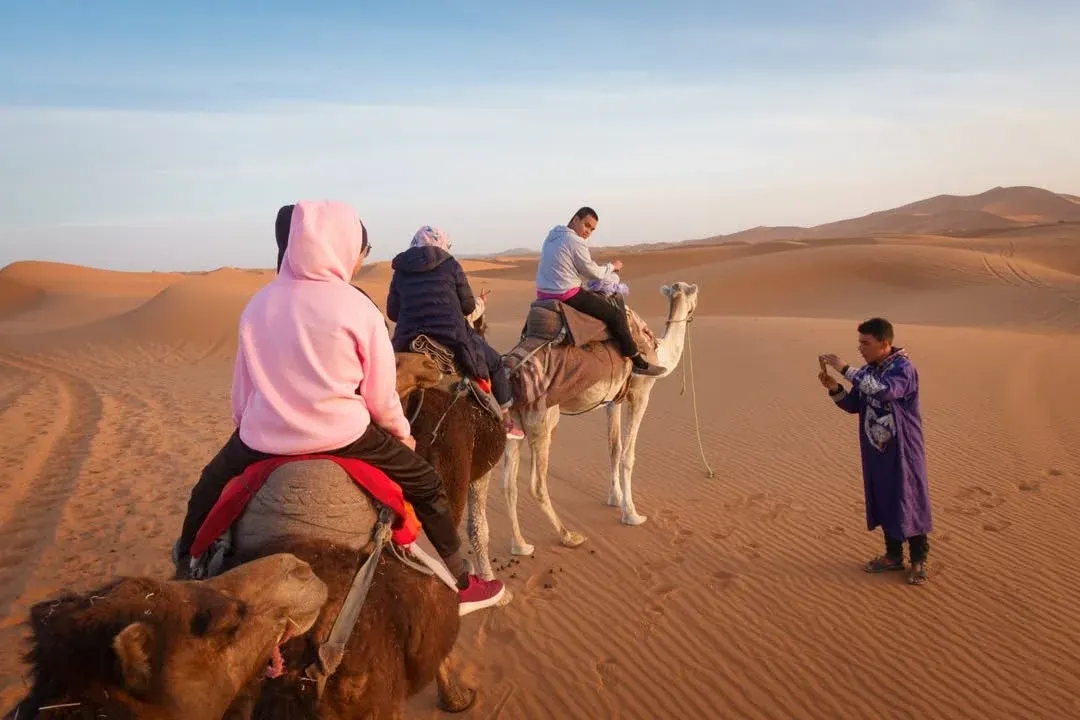
On a camel, you will need to carry it on your back or have it tied to the saddle, so smaller and softer is better. Hard suitcases do not travel well on camels.
Overnight bag checklist
- Change of clothes for the next day (or just a fresh top and underwear)
- Warm layer for the evening (see seasonal notes below)
- Toothbrush, toothpaste and a small toiletry kit
- Any medication you take daily
- Phone, charger and a small power bank
- Head torch or small torch
- Refillable water bottle
- Any valuables you do not want to leave in the vehicle
Check with us which items you can leave in the vehicle or with your main luggage overnight; arrangements depend on where you start your desert stay.
Clothing: dress for heat, sun and cold
The desert can feel hot in the afternoon and cold after midnight on the same day. Layers are the answer.
All year
- Loose, breathable long sleeves and trousers — they protect from sun and sand better than shorts and vests, and are respectful in villages.
- A scarf or cheche (the long desert head wrap) — useful against sun and windblown sand. You can buy one locally and your guide can show you how to tie it.
- Comfortable closed shoes or sandals — the sand is easier barefoot or in sandals, but closed shoes are better for walking around camp at night and on rocky ground.
- Sunglasses with good UV protection.
- Sun hat with a brim.
Spring and autumn
- A fleece or light down jacket for the evening.
- Long trousers to sleep in.
Winter (roughly December to February)
Nights can approach freezing, and sometimes drop below. Bring more than you think:
- Warm jacket (down or synthetic insulated)
- Thermal base layers for sleeping
- Hat, gloves and warm socks
- An extra fleece
Camps generally provide blankets, but the amount of bedding and any extra comforts vary by camp and category, so ask about your specific camp. Our season guide explains more about winter nights.
Summer (roughly June to August)
- Very light, loose cotton or linen clothing
- A thin layer for the early hours, when it can feel cooler
- Extra sun protection — this is the time of year to be careful
Sun and sand protection
- High-SPF sunscreen and lip balm with SPF
- Sunglasses (worth repeating)
- Moisturiser — the air is very dry
- Eye drops if you wear contact lenses; consider wearing glasses on windy days, as sand and contacts are not friends
- Resealable plastic bags or a dry bag for your phone and camera when it is windy
Health and personal items
- Personal medication, in your hand luggage, with a copy of any prescriptions
- A small first-aid kit: plasters, blister care, painkillers, rehydration salts and something for an upset stomach
- Hand sanitiser and wet wipes
- Tissues or a small roll of toilet paper
- Insect repellent in warmer months
- Any feminine hygiene products you need — options in the desert are limited
If you have back problems, are pregnant or have any condition that could be affected by a camel ride, a long drive or sleeping at camp, please tell us when you book. A camel ride may not be suitable, and we can usually arrange a 4x4 transfer to camp instead.
Tech and photography
- Phone and charger
- Power bank — charging options depend on the camp. Some camps have electricity or charging points in tents or the main area; simpler camps may have limited or solar power only. Check what your camp offers.
- Camera with spare batteries (cold nights drain batteries faster — keep them in your sleeping bag or pocket)
- A small tripod if you want to try night-sky photography; remember that clear skies depend on the moon and the weather
- Head torch, ideally with a red-light mode so you do not dazzle others when looking at the stars
Mobile signal in the dunes is variable. Do not count on being able to upload or video-call from camp.
Water and snacks
Water is generally provided with meals at camp, but bring a refillable bottle to keep with you. On a camel trek or a guided dune walk you will want water to hand. A few snacks for the drive are also a good idea — the roads to Merzouga are long.
Money and documents
- Passport (or a copy, depending on where your original is kept — your passport may be needed at hotels along the way)
- Some cash in Moroccan dirhams for tips, drinks or small purchases; card payments are not always possible in the desert
- Travel insurance details
What to leave behind
- Large suitcases — leave them in the vehicle or at the hotel.
- Drones — Morocco has strict rules on importing and flying drones. Do not bring one unless you have checked current regulations and any required authorisations.
- Expensive jewellery you do not need.
- Single-use plastics where you can avoid them. The desert has no rubbish collection by magic; whatever comes in must go out.
Packing for children
If you are travelling as a family, add:
- A favourite comfort item for sleeping somewhere new
- Extra warm layers for the evening — children often get cold before adults notice
- Sun hats and child-friendly sunscreen
- Small games or a book for the drive
- A torch of their own (a popular one!)
Our family-friendly camp and family camel experience pages have more ideas, and the 6-day family Sahara adventure is paced with children in mind.
Quick printable checklist
- [ ] Small overnight backpack
- [ ] Layers: long sleeves, trousers, warm jacket
- [ ] Scarf / cheche, sun hat, sunglasses
- [ ] Sunscreen, lip balm, moisturiser
- [ ] Medication and small first-aid kit
- [ ] Toothbrush and toiletries, wet wipes, tissues
- [ ] Head torch
- [ ] Phone, charger, power bank, spare camera batteries
- [ ] Refillable water bottle, snacks
- [ ] Some cash in dirhams
- [ ] Passport or copy, insurance details
- [ ] Winter only: hat, gloves, thermals, warm socks
Not sure which camp is right for you?
Camps around Merzouga range from simple, traditional tents to luxury camps with private bathrooms. What you pack depends partly on which you choose. Compare our standard desert camp and budget desert camp options, read our luxury desert camp guide, or contact our team with your dates and we will tell you exactly what to expect at your camp. When you are ready, build your tour and we will take it from there.