 Short (≤ 2 h)
Milky Way Photography in the Sahara
Photograph the night sky over the dunes, with dark-sky timing planned around the moon and season.
Contact us for a priceView details
Away from city lights, the sky above Erg Chebbi can be spectacular. This relaxed stargazing session, usually from your desert camp, helps you find your way around the night sky.
After dinner, your guide leads you a short way from the camp lights. Lying on blankets on the sand, you’ll learn to pick out key constellations, bright stars and any visible planets, and hear how desert travellers have long used the stars for navigation — along with local names and stories where your guide knows them.
Conditions depend on the moon phase and weather. Around the new moon the sky is darkest and you’ll see the most stars; a full moon lights the dunes beautifully but hides fainter objects. From roughly spring to early autumn, the Milky Way core may also be visible on clear nights, but this cannot be guaranteed.
A telescope or binoculars may be available at some camps — availability is to be confirmed. Bring a warm layer: desert nights cool quickly.
Timings shift with the season (sunrise and sunset change by more than two hours across the year).
We confirm these details in your written quote:
Nights can be cold, especially from November to March — bring warm layers. Use a head torch and stay with the group; don’t wander off into the dunes alone at night.
Contact us for a price. Every trip is priced for your dates, group size, tour type and accommodation level. Send us your plan on WhatsApp or by email and we will send you the price. [TO CONFIRM: payment method (e.g. bank transfer), deposit amount and balance deadline]. A booking is confirmed only after we confirm availability and payment arrangements in writing. We never ask for card details on this website.
Some camps can provide one; availability is to be confirmed for your dates.
Clear skies are common in the desert, but not guaranteed. If conditions are poor, we may suggest another time during your stay.
Short (≤ 2 h)Photograph the night sky over the dunes, with dark-sky timing planned around the moon and season.
 Overnight
Comfortable, mid-range desert tents — a good balance of experience and value.
 Overnight
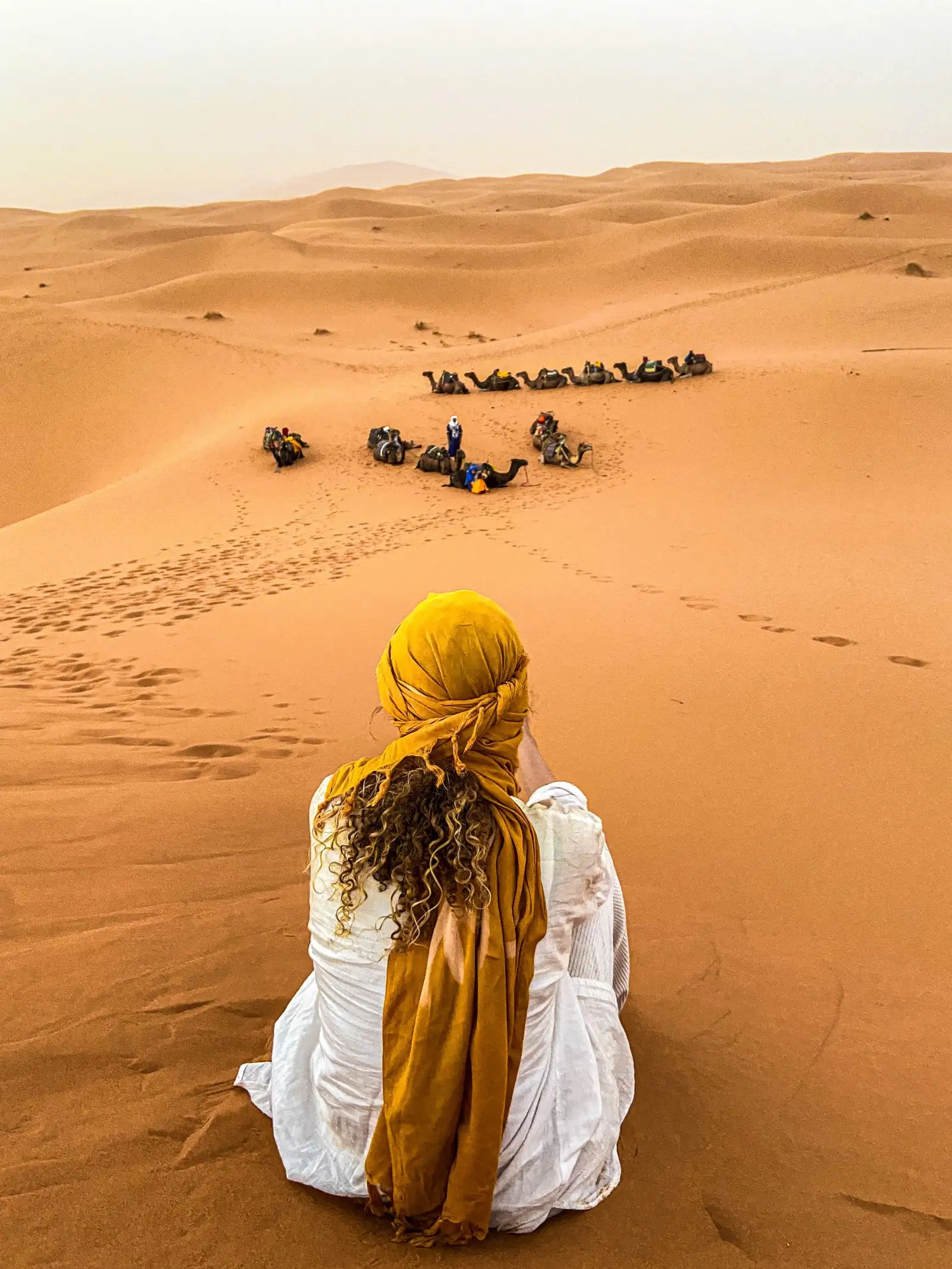
Sunset ride in, a night under desert skies, and a sunrise ride back out.