
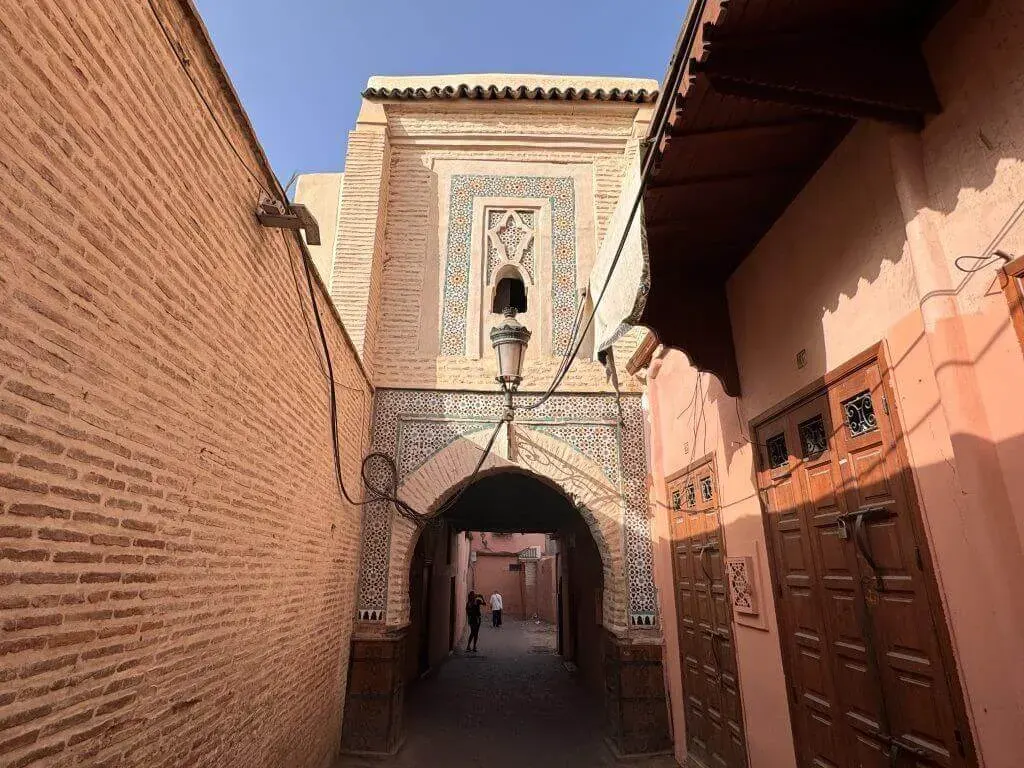
 7 days
7-Day Morocco Highlights Tour
A week linking Marrakech, the Sahara and Fes, with guided medina tours, a desert camp and Roman Volubilis on the way out.
Contact us for a priceView details
Morocco’s four imperial capitals — Rabat, Meknes, Fes and Marrakech — each tell a different chapter of the country’s history. This tour links them in a natural loop from Casablanca and adds the drive that makes Morocco unforgettable: over the Middle Atlas to the dunes of Erg Chebbi and back west through the gorges and kasbahs of the south.
Casablanca → Rabat → Meknes → Volubilis → Fes → Ifrane → Midelt → Merzouga → Todra → Dades → Ouarzazate → Ait Ben Haddou → Marrakech → Casablanca
Best for: History lovers and first-time visitors who want all four imperial cities with the Sahara at the centre of the trip.
Driving times are approximate and exclude long stops; they vary with weather, roads and traffic.
We meet you at Casablanca Mohammed V airport or your hotel and begin at the Hassan II Mosque, built partly over the Atlantic, with one of the tallest minarets in the world. Guided interior visits run at set times outside prayer hours (to be confirmed for your date). After a drive along the Corniche, we head up the coast to Rabat, the capital. In the late afternoon you can walk through the blue-and-white lanes of the Kasbah of the Udayas above the river mouth, then visit the unfinished Hassan Tower and the Mohammed V Mausoleum.
Leaving Rabat, we drive inland to Meknes, the city of Sultan Moulay Ismail. You see the monumental Bab Mansour gate, the El Hedim square, and the vast royal granaries and stables if time allows. We continue about 45 minutes to Volubilis, the most important Roman site in Morocco, where floor mosaics, a triumphal arch and the basilica stand among olive groves with views of the holy town of Moulay Idriss. A local guide helps bring the site to life. We then drive about an hour and a half to Fes, arriving in the early evening.
With a local guide you explore Fes el-Bali, a labyrinth of more than nine thousand lanes. The day usually includes the Bou Inania and Al Attarine madrasas with their carved cedar and zellige tilework, the Nejjarine fountain, the exterior of the Al Quaraouiyine mosque, and a terrace overlooking the Chouara tanneries. Outside the medina, we can visit the royal palace gates, the Jewish quarter and the hilltop Merinid Tombs for a panorama of the city. Afternoons are free, or you can arrange a cooking class or hammam on request.
An early start takes us south into the Middle Atlas. We pass Ifrane, a tidy mountain town with Alpine-style houses, and the cedar forest around Azrou, where Barbary macaques often gather by the road. After lunch in Midelt, we cross high plateaus and follow the Ziz Valley through its gorges and palm groves towards Errachidia and Erfoud. We reach Merzouga in the late afternoon, in time for a camel ride of about 1–1.5 hours into the Erg Chebbi dunes to watch the sun set. Dinner and the night are at the desert camp.
Wake early for sunrise over the dunes, then ride back to Merzouga for breakfast and a shower. We drive west across the stony plains, possibly via Rissani to see the old caravan town and its market. At Tinghir, a lush palm grove leads into the Todra Gorge, where you can walk between towering limestone walls. Continuing to the Dades Valley, we arrive in the afternoon and, time permitting, drive up to the famous switchback road and the eroded rock formations before dinner at your hotel.
Leaving Dades, we follow the valley of kasbahs past Kelaat M’Gouna and Skoura to Ouarzazate. A short drive brings us to Ait Ben Haddou, where you can explore the ksar on foot and have lunch with a view. In the afternoon we climb the High Atlas over the Tizi n’Tichka pass at 2,260 m, a winding road with fine views of terraced valleys and villages. We descend to Marrakech in the early evening and you check into your riad or hotel.
A guide introduces you to Marrakech: the Koutoubia Mosque (exterior), the Bahia Palace, the Saadian Tombs and the restored Ben Youssef Madrasa (subject to opening), followed by a walk through the souks of the medina. In the afternoon you might visit the Majorelle Garden, enjoy a hammam or return to the main square, Jemaa el-Fna, at dusk when the food stalls set up. As this is your last full day, you may prefer to keep the afternoon free for shopping or rest.
After breakfast, the tour ends with a transfer. If your flight leaves from Casablanca, the motorway drive to Mohammed V airport takes about three hours; we plan departure time around your flight with a comfortable margin. If you are flying out of Marrakech, we drive you to Menara airport, which is close to the city, or simply say goodbye at your accommodation if you are staying on. Should you have a late flight, luggage storage and a few extra hours in the city can usually be arranged with your riad.
We confirm these details in your written quote:
Every night is booked in the comfort level you choose at booking. Budget means clean, simple guesthouses, auberges and family-run riads, some with shared or basic facilities. Standard means well-located mid-range hotels, riads and kasbah guesthouses with private bathrooms. Luxury means boutique riads, characterful kasbah hotels and premium properties. In the Sahara the same logic applies to the camp: a budget camp has simple tents and often shared washing facilities; a standard camp usually offers private tents, many with en-suite toilet and shower; a luxury camp has larger, furnished tents with en-suite bathrooms, more space and a more refined dinner. Exact properties are confirmed in writing before you travel and depend on availability. City nights in Rabat, Fes and Marrakech can be in traditional riads or in modern hotels with easier car access.
On private departures you travel in an air-conditioned vehicle (typically a minivan or 4x4, depending on group size) with an English- or French-speaking driver who knows the route well. Breakfast and dinner are normally included on touring nights as part of the typical plan; lunches are usually taken at local restaurants of your choice along the way and paid locally. Vegetarian and other dietary needs can usually be catered for if mentioned at booking. On guided city days only breakfast is included in the typical plan.
Day 4 is long (7–8 hours including stops) and crosses the Middle Atlas, where winter snow can occasionally close roads for a few hours. The Tizi n’Tichka pass climbs to 2,260 m on a well-surfaced but winding road with many hairpin bends; if you are prone to travel sickness, sit near the front and bring medication. Camel rides are gentle but not suitable for everyone: they are not recommended during pregnancy or for people with back, hip or serious joint problems, and riders above roughly 100–110 kg should tell us in advance (limits are set by the camel handlers — to be confirmed). Walking alongside the camels is always an option. Desert temperatures swing widely: summer afternoons can exceed 40 °C and winter nights can drop close to freezing, so pack layers. The Hassan II Mosque requires modest dress (shoulders and knees covered). Medina streets, kasbah stairs and soft sand are difficult for wheelchair users and people with limited mobility; tell us your needs and we will advise honestly what can be adapted.
Contact us for a price. Every trip is priced for your dates, group size, tour type and accommodation level. Send us your plan on WhatsApp or by email and we will send you the price.
[TO CONFIRM: payment method (e.g. bank transfer), deposit amount and balance deadline]. A booking is confirmed only after we confirm availability and payment arrangements in writing. We never ask for card details on this website.
[TO CONFIRM: cancellation windows and refund conditions]. See our Cancellation Policy. Read the policy, our booking terms and the Sahara tour FAQs.
Yes, through guided tours run by the mosque at set times outside prayer hours. Times can change, so we confirm them for your date.
No. The tour can end in Marrakech, which has its own international airport, saving the drive on Day 8.
Yes, an extra night lets you explore Khamlia, Rissani or try optional activities, and makes Day 5 more relaxed.
7 daysA week linking Marrakech, the Sahara and Fes, with guided medina tours, a desert camp and Roman Volubilis on the way out.
 10 days
The classic ten-day circuit: Casablanca, Rabat, Chefchaouen, Fes, two nights in the Sahara, the southern kasbahs and Marrakech.
5 daysMorocco’s four imperial cities plus Casablanca and Roman Volubilis, with two nights in Fes and a finish in Marrakech.