The road from Marrakech to Merzouga is one of the great journeys in Morocco. It crosses the High Atlas, passes kasbahs and palm oases, threads through two gorges and finishes at the orange dunes of Erg Chebbi. It is also long. Knowing roughly what each day involves helps you choose the right tour length and arrive in the desert with energy left to enjoy it.
The basics
- Total driving time: about 9 to 10 hours without stops, so the journey is always split over two days.
- Distance: roughly 550 to 600 km depending on the exact route.
- Highest point: the Tizi n'Tichka pass at 2,260 m.
- Typical overnight on the way: the Dades Valley or Todra Gorge area.
All driving times below are approximate and do not include stops unless stated.
The route, stage by stage
Marrakech to Ait Ben Haddou (about 3.5 to 4 hours)
You leave Marrakech in the morning and climb into the High Atlas. The road over Tizi n'Tichka is well surfaced but winding, with long views across Amazigh villages and terraced valleys. If you are prone to motion sickness, sit near the front and take something before you go.
On the far side, a short detour brings you to Ait Ben Haddou, the fortified village (ksar) of earthen buildings that is a UNESCO World Heritage Site. Allow an hour or so to walk up through the lanes to the granary at the top.
Ait Ben Haddou to Ouarzazate (about 30 minutes)
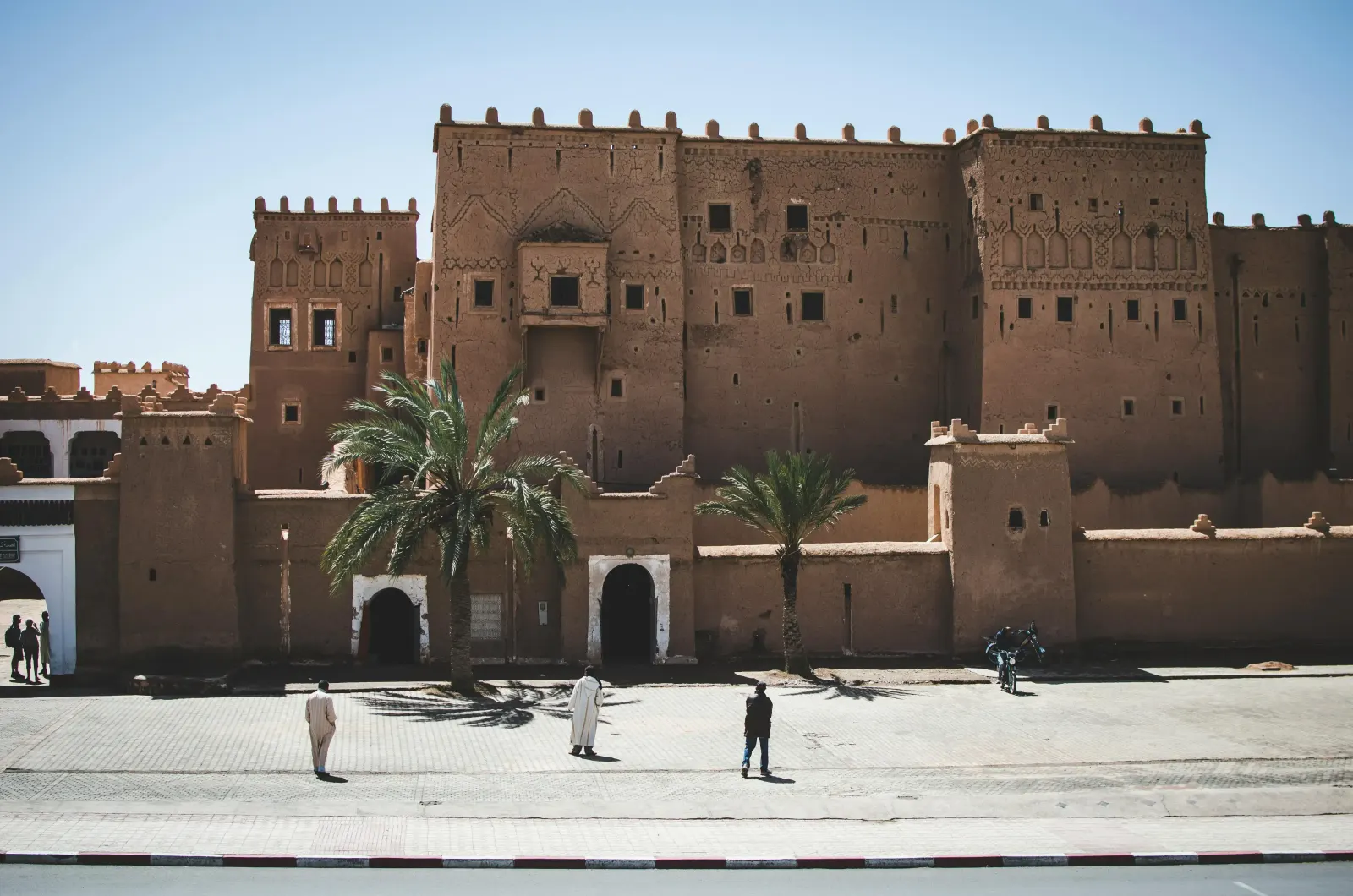
Ouarzazate is known for its film studios and the Taourirt Kasbah. Most tours pass through for lunch or a short stop rather than lingering.
Ouarzazate to the Dades Valley (about 2 hours)
The road follows what is often called the Road of a Thousand Kasbahs, through Skoura's palm groves and the rose-growing area around Kelaat M'Gouna. You reach the Dades Valley in the late afternoon. Including stops, this first day is typically 7 to 8 hours.
Dades to Todra Gorge (about 1 hour)
On day two, many guides first drive a short way up the Dades Gorge to see the switchback road and rock formations, then continue to Tinghir and the Todra Gorge. Here the canyon walls rise steeply on both sides of a narrow path. A walk through the gorge and, if time allows, through the palm groves below is a highlight.
Tinghir to Merzouga (about 3 hours)
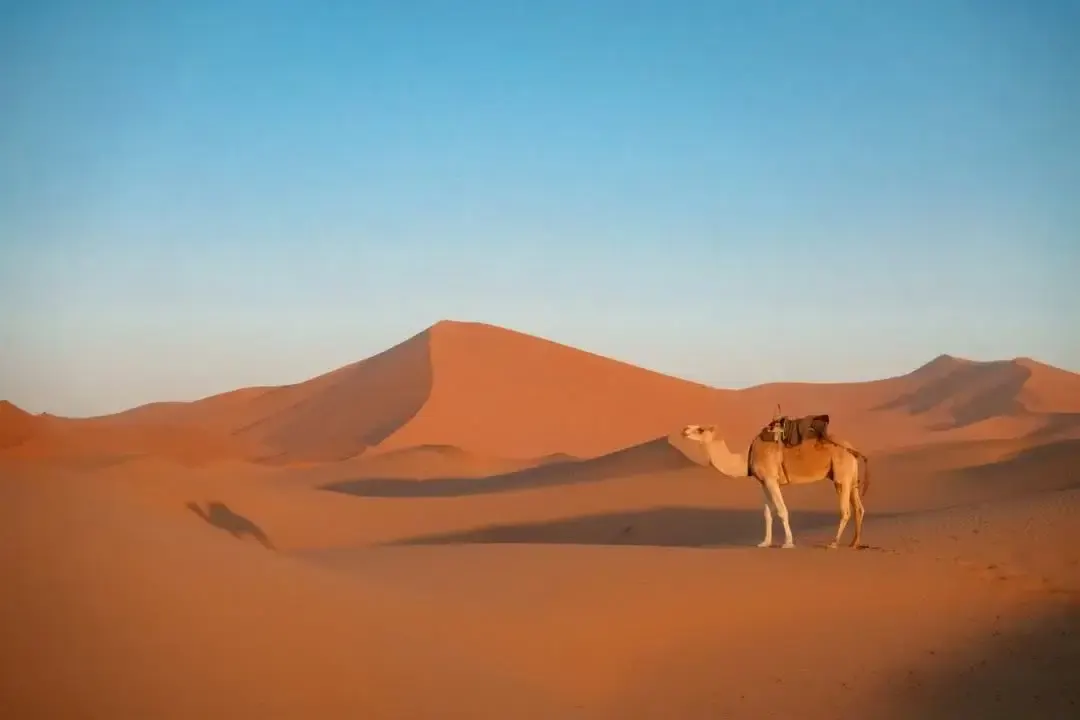
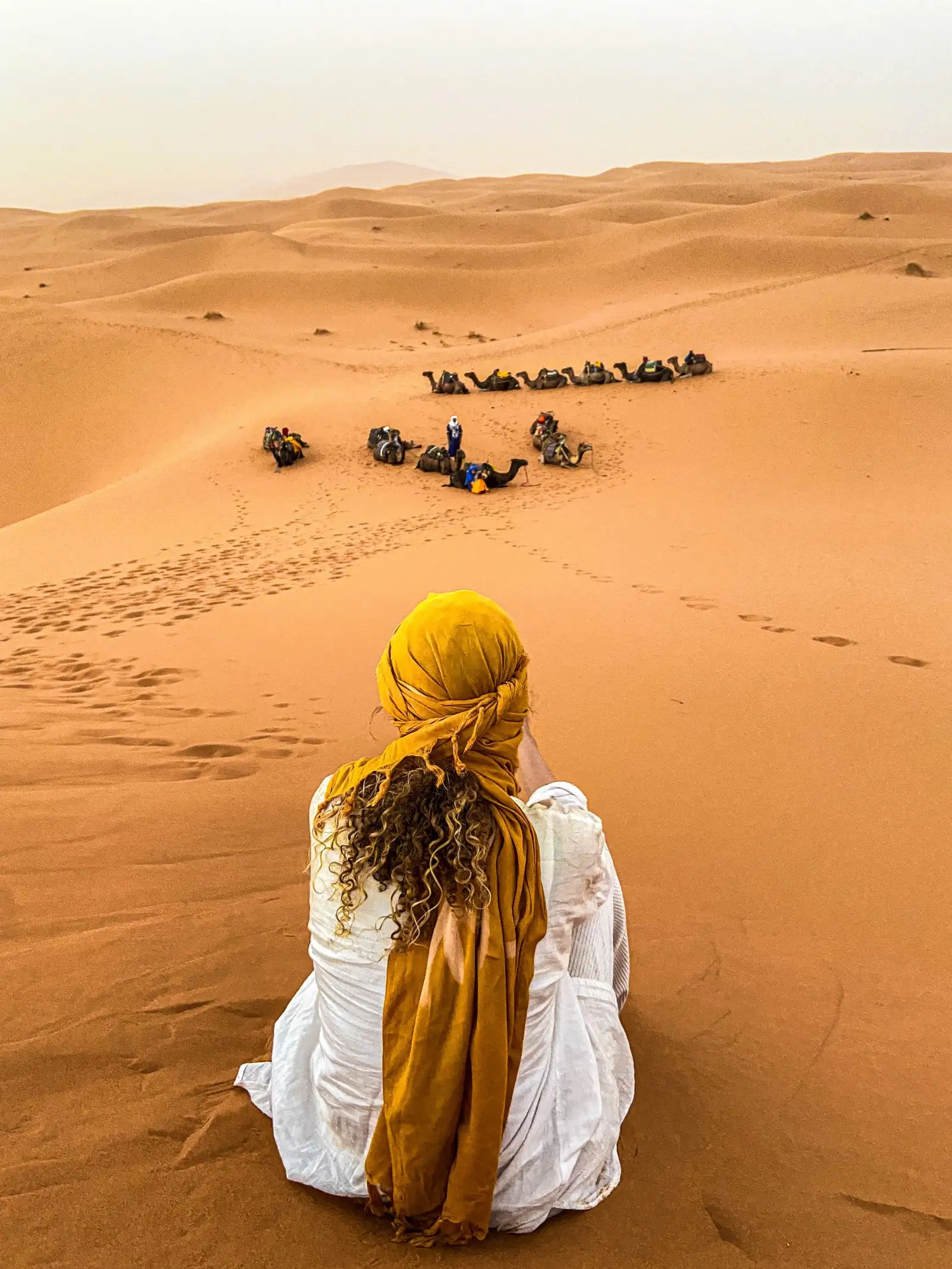
The final stretch crosses wide stony plains via Tinejdad, Erfoud and Rissani. The dunes appear on the horizon as you approach Merzouga, usually in the late afternoon. From there you transfer to camp by camel or 4x4.
3 days or 4 days?
This is the question we are asked most often. Here is the honest comparison.
The 3-day tour
A 3-day Marrakech to Merzouga tour usually runs:
- Day 1: Marrakech, Ait Ben Haddou, Ouarzazate, overnight Dades.
- Day 2: Dades and Todra Gorges, arrive Merzouga, night at desert camp.
- Day 3: Sunrise, then a long drive to Fes (about 7 to 8 hours via Midelt and Ifrane).
This works well if you are travelling on to Fes anyway. It is efficient and you see a lot. The downside is that your time in the dunes is limited to one evening and one early morning.
What does not work well is a 3-day round trip back to Marrakech. That means roughly 9 to 10 hours of driving on day three, straight after an early sunrise. It is possible, but most people find it exhausting, and we generally advise against it.
The 4-day tour
A 4-day Marrakech to Sahara and back tour usually adds a night on the return. A common shape is:
- Day 1: Marrakech to Dades via Ait Ben Haddou.
- Day 2: Todra Gorge to Merzouga, desert camp.
- Day 3: Sunrise, then drive to Ouarzazate or the Dades area (about 5 to 6 hours to Ouarzazate).
- Day 4: Over the Atlas back to Marrakech.
This is the sensible choice if you need to return to Marrakech. It also gives more breathing room for stops.
When to go longer
If you have five days or more, consider a second night in Merzouga for activities, or a loop that returns via Zagora and the Draa Valley. Zagora to Merzouga is about 5 to 6 hours via Tazzarine and Alnif, so this adds variety but not much rest. For a slower, more comfortable version, our 6-day luxury Sahara and kasbah journey spreads the distance out.
Practical considerations
- Weather on the pass. In winter, snow can occasionally close or slow Tizi n'Tichka. Drivers watch conditions, and plans may need to adapt.
- Altitude. 2,260 m is not high enough to cause problems for most people, but it can be cold and windy at the top.
- Comfort stops. Expect regular breaks for coffee, toilets and photographs. A private tour lets you set these yourself.
- Lunch. Usually at roadside restaurants on the route and often not included; check your tour details.
- Children. Long days can be hard for young children. Breaking the journey into shorter sections helps.
- Health. If you have back problems or are pregnant, the camel ride to camp may not be suitable; ask for the 4x4 transfer instead.
Shared or private?
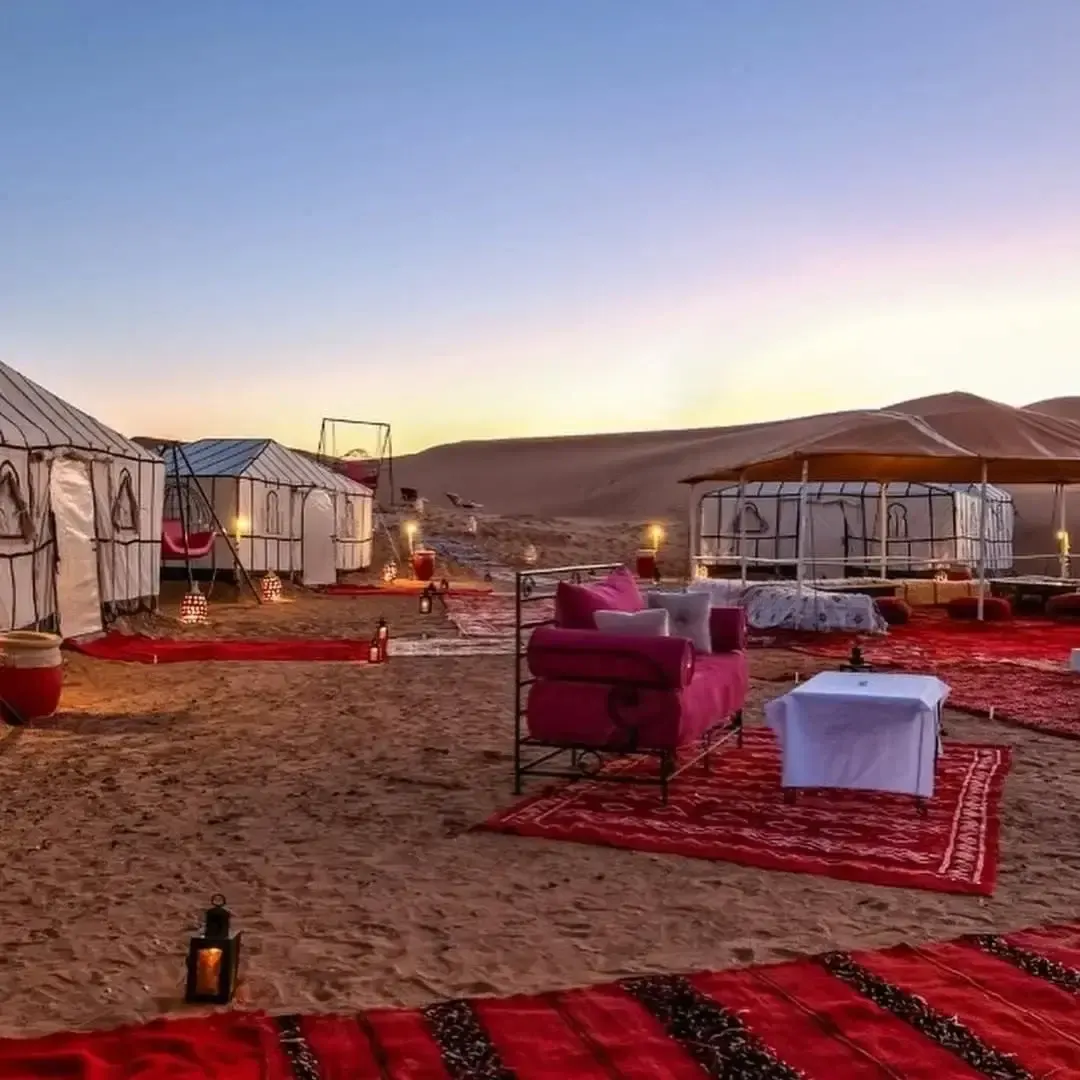
Shared tours from Marrakech follow a fixed schedule with a set number of stops and usually use budget or basic standard camps. Private tours let you change pace, add stops and choose your camp standard. For families, couples who want flexibility, or anyone who dislikes being rushed, private is generally the better fit. More on choosing between them is in our Merzouga desert tours guide.
Plan your route
If you are torn between three and four days, or want to add a night somewhere special, send us your dates and where you need to finish. We will suggest a plan with realistic daily driving. Message us on WhatsApp via our contact page or start on build your tour.